


May-Thurner Syndrome is one of the most frequently overlooked causes of left
leg swelling, heaviness, and chronic discomfort. The condition occurs when
the right iliac artery compresses the left iliac vein, restricting blood flow from
the left leg back to the heart. Because symptoms often resemble other
common vein problems, it is frequently misdiagnosed or attributed to other
causes for years before being identified.
This hidden form of pelvic vein compression disproportionately affects young
to middle-aged women, though it can occur in men as well. Beyond causing
persistent left leg swelling and discomfort, it carries a meaningful risk of deep vein thrombosis (DVT) and, over time, can accelerate valve damage in the lower leg due to sustained pressure buildup. In some women, it also
contributes to pelvic congestion syndrome.

The condition is defined by the anatomical relationship between the right iliac
artery and the left iliac vein. As the artery crosses over the vein, it can exert
chronic compressive pressure that restricts outflow from the left leg. This
raises venous pressure, causing swelling, heaviness, and over time, visible varicose veins and increased clot risk.
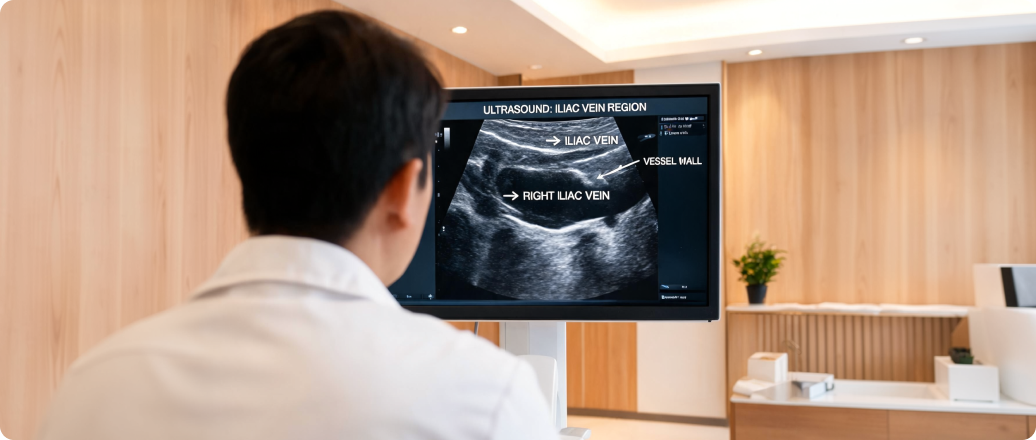
Standard vein evaluations often miss May-Thurner Syndrome entirely because
the compression occurs at the pelvic level, above where most routine
ultrasounds focus. Accurate diagnosis requires targeted imaging that can
assess the iliac veins directly.
Affects primarily the left leg due to the right iliac artery crossing over the left iliac vein
Significantly increases the risk of deep vein thrombosis if left untreated
Often missed by standard ultrasound. IVUS or CT/MR venogram is required for accurate diagnosis
Iliac vein stenting has high success rates and is typically covered by insurance when medically indicated
The most common presenting sign. Swelling isolated or significantly worse on the left side warrants evaluation for iliac vein compression.
Left leg discomfort that builds through the day and is most pronounced with prolonged standing or by late afternoon.
A sense of leg fatigue, tightness, or tiredness that appears during activity and does not fully resolve with rest.
A prior deep vein thrombosis in the left leg, particularly without an obvious cause, is a strong indicator of possible iliac vein compression.
Visible or abnormal varicose veins in the left leg, groin, or lower abdomen, especially those that developed at a young age or without obvious cause.
In some women, iliac vein compression contributes to pelvic congestion syndrome, with associated chronic pelvic discomfort and pressure.
Why Early Treatment Matters
Worsening left leg swelling that becomes increasingly difficult to manage with compression or lifestyle measures alone.
Untreated iliac vein compression significantly increases the risk of clot formation in the deep veins of the left leg.
A DVT originating from a compressed iliac vein carries the risk of pulmonary embolism, a potentially life-threatening complication.
Sustained venous hypertension damages vein valves in the lower leg, accelerating the development of chronic venous insufficiency.
Long-standing venous hypertension can eventually lead to skin changes, discoloration, and in advanced untreated cases, venous ulcers.
After a DVT, ongoing compression prevents proper healing and can cause permanent chronic leg pain, swelling, and disability.
Placement of a vein stent to reopen the compressed iliac vein and eliminate outflow obstruction. High success rates and a well-established safety profile.
The diagnostic evaluation and treatment procedures are generally eligible for coverage
Closure of abnormal varicose veins that developed secondary to the outflow obstruction.
Removal of prominent surface varicose veins where appropriate, as part of a complete treatment plan.
Ongoing support to optimize circulation and prevent future complications following treatment.
Significant reduction in left leg swelling, often noticeable within weeks of treatment
Relief from heaviness, aching, throbbing, and fatigue in the left leg
Substantially lower risk of future DVT or blood clot formation in the left leg
Improved long-term vein health and circulation, protecting against chronic vein damage
Every evaluation, diagnostic workup, and treatment is personally led by Dr. Husein Poonawala.
Our process includes high-resolution ultrasound, IVUS, and cross- sectional imaging.
We address the underlying compression and any coexisting venous reflux or varicose veins as part of the same complete plan, not in isolation.
Our focus is on restoring healthy venous circulation and maintaining it over time, protecting you from future complications.
If you are living with left leg swelling, heaviness, discomfort, or a history of DVT, May-
Thurner Syndrome could be the hidden cause. Most patients have seen multiple providers
without a clear explanation. Advanced diagnostics change that.